Forged Blank
GEAR MANUFACTURING
Forged blanks, ready for the next operation.
A forged gear blank is a metal preform shaped under compressive force before gear cutting and final finishing. Its geometry leaves stock for the bore, faces and tooth profile.
Discuss the blank together with the finished gear drawing, steel grade and heat treatment plan.
Start with the shape of the finished part
Disc, ring and stepped-shaft forms call for different stock distribution. The forging drawing should account for the surfaces that will be machined later.
Disc & hub blanks
A solid or hubbed preform for a gear body. Leave stock on the faces, outside diameter and any bore to be machined.
Ring blanks
An annular preform for a hollow gear body. The bore, wall thickness and section shape help determine the forming route.
Stepped shaft blanks
A preform with material concentrated around shoulders and larger diameters. Plan the datum surfaces and transitions before cutting the teeth.
PROCESS SELECTION
Hot, warm or cold forging?
Temperature changes metal flow, tooling load and the amount of finishing needed. Compare forming, heat treatment and machining as one production route.
| Review point | Hot forging | Warm forging | Cold forging |
|---|---|---|---|
| Forming temperature | High enough for recrystallization during deformation | Elevated, below the usual hot-forging range | At or near room temperature |
| Load & metal flow | Lower flow stress; suited to substantial shape changes | Lower loads than cold forging for a comparable part | Higher forming loads; ductility and lubrication matter |
| Surface & dimensions | Allow for scale and cooling shrinkage | Can reduce scale and thermal size changes | Often closer tolerances and a smoother surface |
| Planning focus | Heating control, die fill and machining stock | Temperature window, die loads and surface condition | Tooling strength, work hardening and intermediate annealing |
| Where to start | Large section changes and complex preforms | Parts needing a balance of flow and dimensional control | Repeat parts with suitable geometry and material |
These are general tendencies for comparable parts. Steel grade, geometry, tooling and production volume determine the practical choice. Process reference.
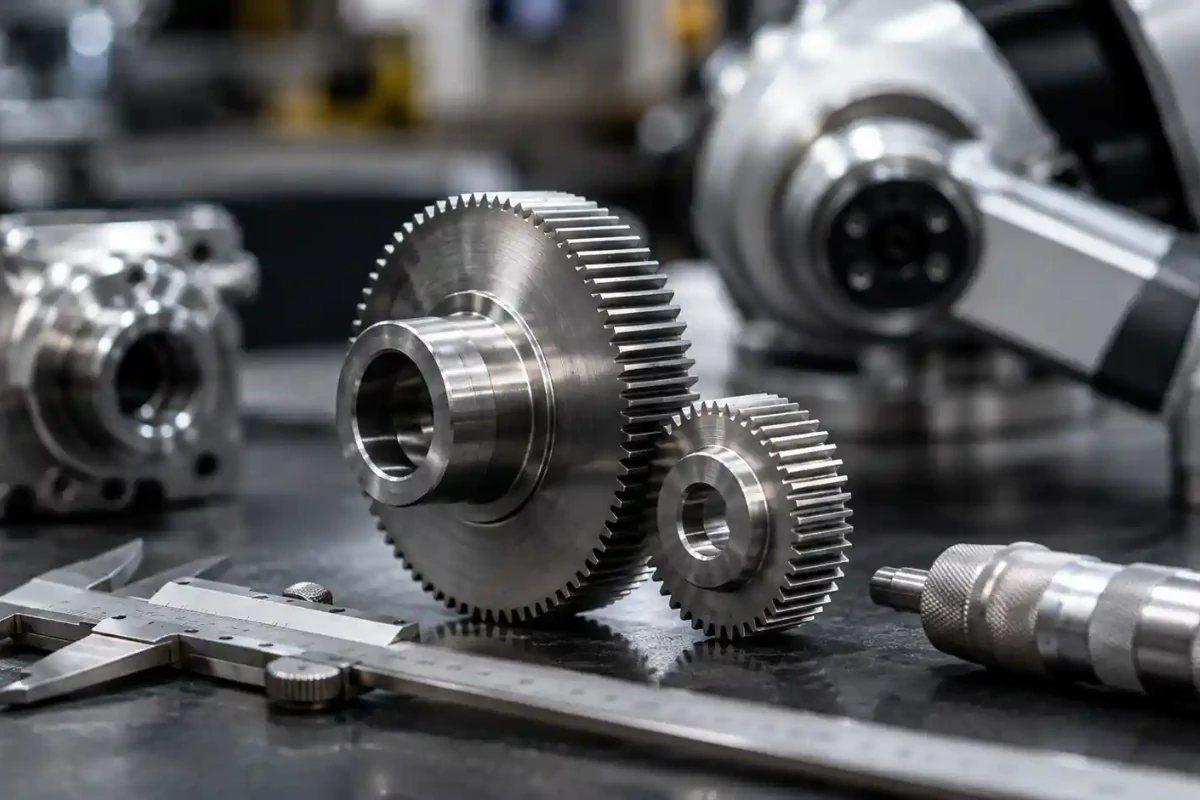
Finished gear geometry guides blank preparation. Process sequence depends on the part.
FROM STOCK TO GEAR
A route planned around the drawing
A typical route links forging with machining and heat treatment. The blank is one stage in that sequence.
Prepare the stock
Confirm the material and cut-stock volume. Set the heating or conditioning route for the chosen process.
Form the blank
Distribute the metal through preforming and finishing operations. Trim flash or pierce features where the route requires it.
Condition & inspect
Agree cooling, normalizing or annealing as needed. Check dimensions, surface condition and material identity.
Machine the gear
Establish datums, turn the blank and cut the teeth. Coordinate hardening and final finishing with the drawing.
MATERIAL & ACCEPTANCE
Specify the steel and the inspection plan
Choose the grade with the final heat treatment in mind. A similar grade name does not establish equivalence between standards.
| Grade | Typical treatment route | Define on the drawing |
|---|---|---|
| 16MnCr5 | Case hardening by carburizing | Case depth, surface hardness and core requirements |
| 42CrMo4 | Quenching and tempering | Section size, hardness and mechanical properties |
What to agree before production
- Drawing revision, datums and machining allowance
- Material identification and required certificates
- Surface acceptance and any specified NDT
- Hardness, dimensions and sample approval criteria
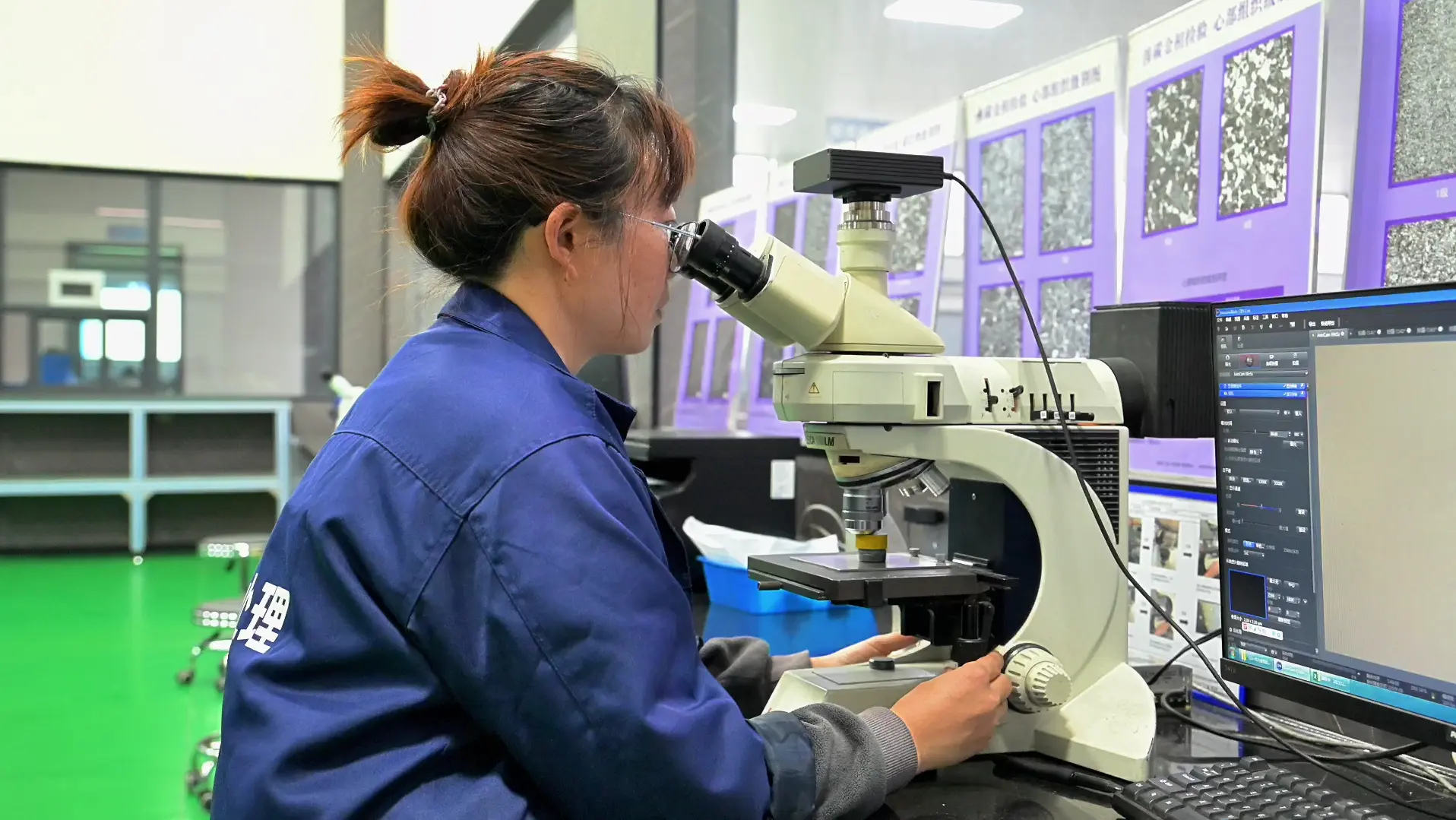
Specify the inspection method and acceptance criteria for the component.
Before you specify a blank
Bring the finished-part drawing into the discussion early.
Does a forged blank already have gear teeth?
Usually, a gear blank has the body shape and the teeth are cut later. Precision forging can form teeth in some dedicated processes; that route needs its own tooling and finishing plan.
How much machining allowance is needed?
There is no single allowance for every blank. Agree it for each surface using part size, process capability, scale, distortion and the required machining operations.
What should I send with an enquiry?
Send the current drawing or model, steel grade, quantity and intended heat treatment. Include inspection requirements and whether you need a blank, a machined blank or a finished gear.
Discuss your forged blank with Tobo Gear
Share the drawing and order quantity so the blank and downstream operations can be reviewed together.
Technical background: FIA Product Design Guide for Forging. Illustrations show general geometry. Final process and acceptance criteria are agreed against the drawing.